Why Dark Colors Feel Hotter in August - and What to Wear Instead
Quick Answer: Dark fabrics absorb most of the sunlight that hits them and convert it to heat at the fabric surface - black clothing in direct sun can run noticeably hotter than white, and you feel that difference within minutes of stepping outside. In late August sun, color choice matters most for the sunny-side commute, the outdoor walk, and the patio lunch, and barely matters indoors. The fix is not abandoning dark colors but repositioning them: light and mid-tone colors for direct sun hours, darks for evenings and air conditioning, and looser weaves whenever the fabric will sit in sunlight.
You stepped outside in the black set that looks amazing, and by the end of the block you could feel your shoulders cooking. The outfit was not wrong. The scheduling was.
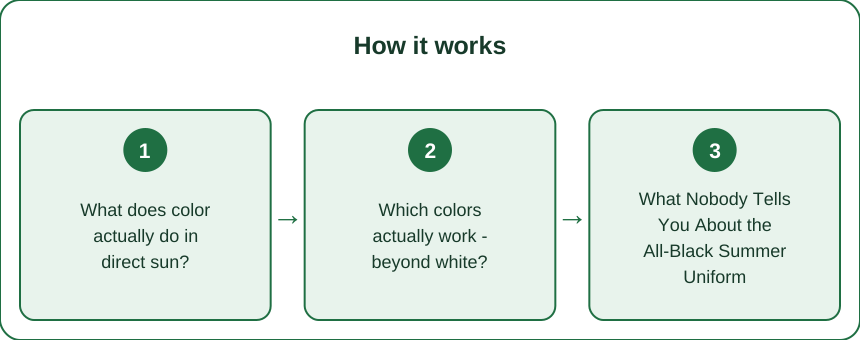
What does color actually do in direct sun?
The physics fits in a paragraph, and it explains the whole sweaty phenomenon.
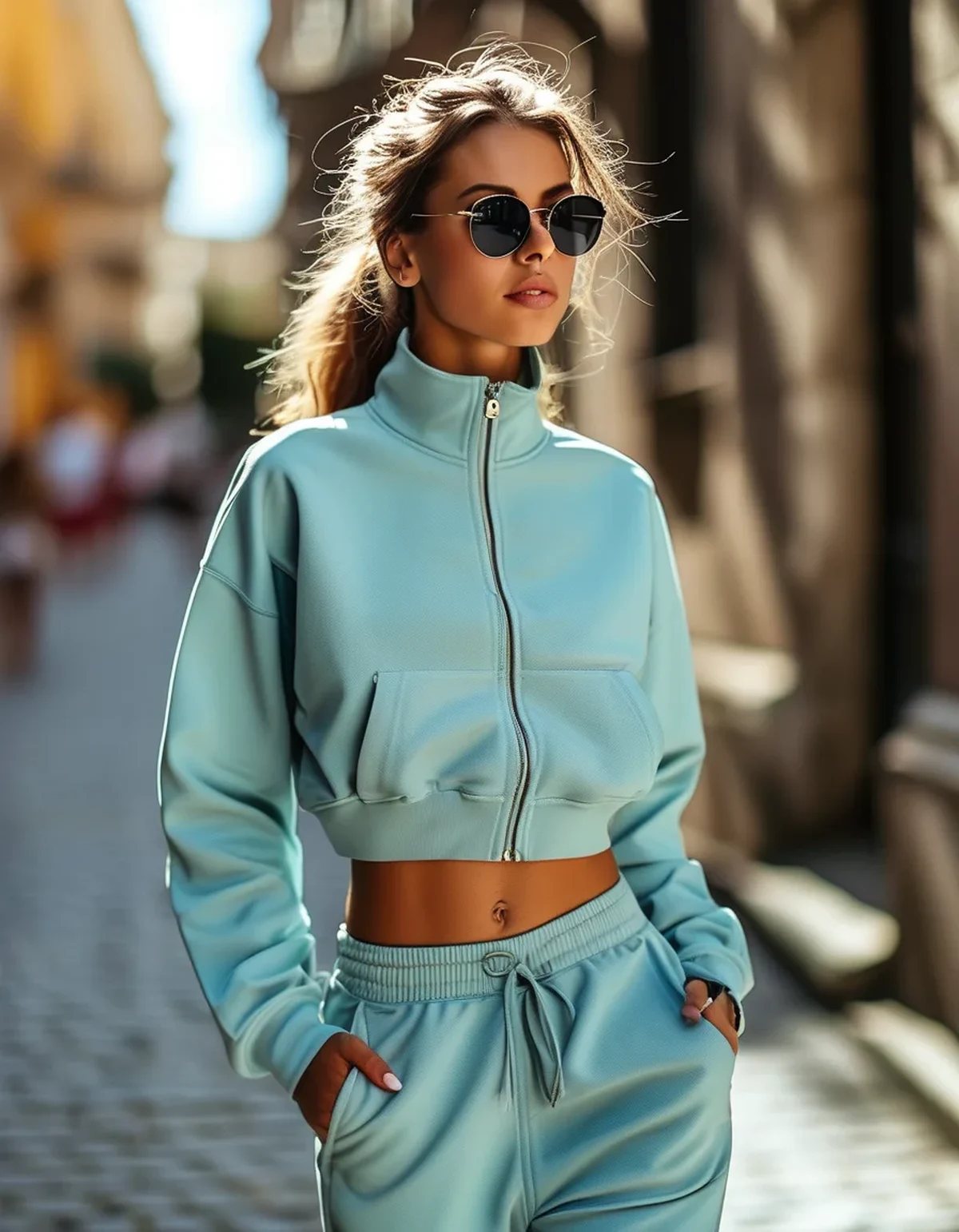
Dark colors absorb; light colors reflect. Black fabric absorbs the large majority of visible sunlight hitting it and turns that energy into heat right at the fabric surface. White reflects most of it away. In strong sun the surface temperature difference between a black tee and a white one is substantial - easily the difference between warm and genuinely hot to the touch.
The heat then has one place to go: you. A hot fabric layer sitting near your skin radiates and conducts inward, and it also pre-warms the thin layer of air your body is trying to dump heat into. Your cooling system now works against a heated blanket.
Shade changes everything. Out of direct sun, color’s effect collapses to nearly nothing - indoors or under awnings, black and white perform almost identically. This is why the all-black airport outfit feels fine and the all-black street festival outfit does not.
Fit decides how much the surface heat reaches you. A loose dark garment with air moving underneath sheds much of its surface heat to the breeze - the logic of traditional loose dark desert robes. A fitted dark garment holds the hot layer against your skin, which is why the tight black tank suffers more than the flowy black dress.
Humidity raises the stakes. Late-August air already blunts sweat evaporation; adding absorbed solar heat on top of impaired cooling is why the same outfit feels dramatically worse in August than it did in dry early June.
So the rule is situational: color matters in direct sun, in proportion to how fitted the piece is and how long you will be out.
Which colors actually work - beyond white?
The useful palette is wider than the white-tee cliche, and some of it is surprising.
Light neutrals are the workhorses. Ivory, oat, sand, pale grey - high reflectance, low sweat-visibility drama, and they photograph like intent rather than surrender. A sand-toned matching set reads polished and runs cool.
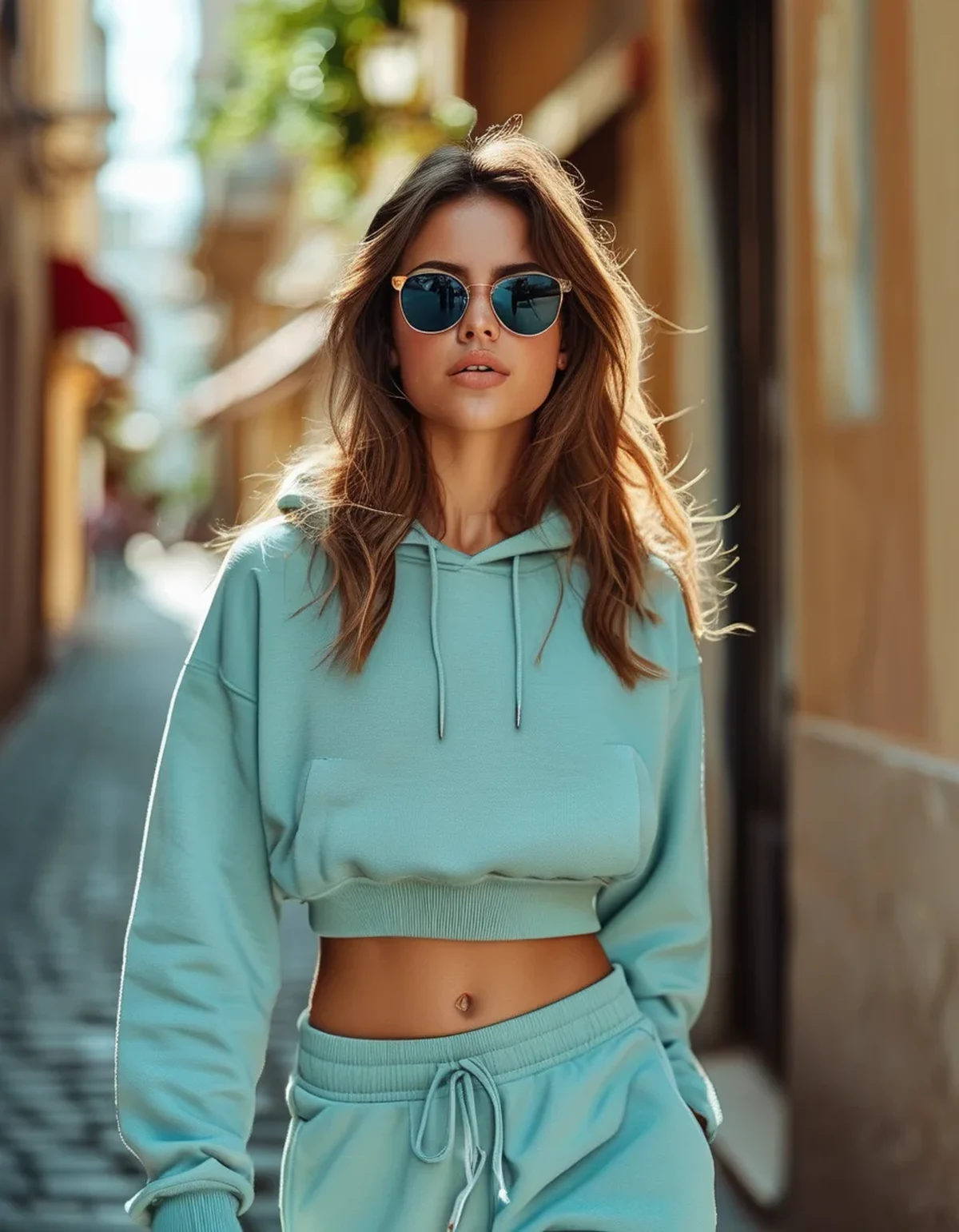
Mid-tone earth and sage colors punch above their weight. Sage, eucalyptus, clay, faded denim blue - meaningfully cooler than black in sun while hiding the wear-and-tear that stark white shows by 3pm. This is the zone where most late-summer activewear collections quietly live.
Pale does not mean pastel-sweet. If pastels are not your language, cool light shades - bone, stone, mushroom, washed olive - carry the same physics with none of the candy.
Sweat marks are a color property too. Pale grey is the famous offender, darkening loudly when damp; white, true black, and busy patterns hide moisture best. Light heathered tones and textured weaves split the difference - reflective enough to run cool, forgiving enough for a real commute.
Your bottoms are usually in shade. Legs see less direct sun than shoulders, so dark bottoms cost less than dark tops. Black yoga pants under a light top is a legitimately smart August split - the reverse, light bottoms under a black top, gets the physics backwards.
And UV protection is a separate axis. Dark and densely woven fabrics generally block UV better than sheer pale ones. If you burn easily, a light loose weave wants sunscreen underneath or a UPF-rated fabric doing the reflecting for you.
What Nobody Tells You About the All-Black Summer Uniform
Black earned its status indoors. The all-black uniform grew up in air conditioning - offices, studios, evenings - where color has no thermal cost and black has every styling benefit. It was never designed for the noon sidewalk; we just stopped noticing where it works.
The desert-robe exception is real but specific. Loose, billowing dark robes can perform well in heat because the absorbed warmth drives air circulation under the fabric and the sun never reaches skin. The operative word is billowing - the principle does not transfer to fitted leggings and a tight tank.
Fabric surface finish matters almost as much as shade. A shiny or tightly calendered weave reflects more than a matte, brushed one of the same color. Between two navy tops, the smoother-faced one runs cooler in sun.
Dark colors fade fastest in exactly this season. August UV bleaches blacks toward rusty grey with every sunny wear and line-dry. Rotating darks out of the sun-hours lineup protects the depth of color you bought them for - a wardrobe-preservation argument stacked on the comfort one.
Asphalt radiates upward. Streets and parking lots re-emit absorbed heat at your lower half - one reason city blocks feel hotter than parks at the same air temperature. Lighter, looser bottoms pay off more in built-up areas; buttery-soft leggings in a light shade beat their black twin by more downtown than on a shaded trail.
And evening flips the whole board. After sunset, absorption is irrelevant, mosquitoes reportedly find dark colors less attractive than some brights, and black stops costing anything. The uniform did not need retiring - it needed a curfew shift.
How do you build the late-August color rotation?
A scheduling system, not a shopping list - most wardrobes already contain the pieces.
Sort by sun exposure, not by occasion. The real question for an August outfit is how many minutes it will spend in direct sun. Sunny-side commute, lunchtime errands, outdoor workouts: light and mid-tone tops. Indoor days and evenings: business as usual, blacks included.
Split the outfit at the waist. Light top over dark bottom is the highest-value formula of the season - shoulders reflect, legs stay in their usual shade-and-slimming zone. A bone-colored tank over black flare leggings runs cool where it counts and familiar where it does not.
Keep one true-light set for the hottest days. A sand or ivory matching set - top and high-waisted leggings or shorts - is the heatwave uniform: maximum reflection, zero styling thought at 7am.
Choose weave with the color. The coolest pieces pair a light shade with an open or textured knit - pointelle, mesh panels, slub jersey - so reflection and airflow work together. A light color in a dense thick weave squanders half its advantage.
Let accessories carry the dark. Black cap, charcoal bag, dark sunglasses - the graphic anchor the outfit wants, at trivial thermal cost. This is how the all-black loyalist transitions without feeling like a stranger.
And plan the swap-back now. These same light pieces layer under early-fall jackets for exactly one more month, then the darks rotate home for their season. Late August is not the time to buy a heavy autumn palette - it is the time to let the light one finish its shift.
FAQ: Summer Color Questions, Answered
Do black clothes really make you hotter?
In direct sun, yes - dark fabric absorbs most of the light hitting it and converts it to heat at the surface, and fitted dark pieces pass that heat to you. In shade or indoors the difference nearly vanishes, which is why black feels fine at the office and brutal on the noon sidewalk.
What is the coolest color to wear in the sun?
White and near-white reflect the most, but light neutrals - sand, oat, pale grey - and mid-tone sage or clay shades capture most of the benefit with less glare and less visible wear. Pairing a light shade with a breathable weave matters as much as the shade itself.
Why do loose dark clothes feel okay in heat?
With enough airflow underneath, a loose dark garment sheds its surface heat to moving air before it reaches skin - the desert-robe principle. The effect does not transfer to fitted pieces, where the heated fabric sits directly against you.
Are dark leggings bad for summer workouts?
Outdoors in sun, dark leggings run warmer than light ones, though legs get less direct sun than shoulders - so prioritize a light top first. For indoor training, color is thermally irrelevant; pick the black yoga pants freely.
Which colors hide sweat best?
True black, white, and busy patterns hide moisture well; pale solid grey shows it most. Light heathered tones and textured fabrics are the practical middle - cool-running and forgiving through an August commute.
TL;DR:
- Dark fabric absorbs sunlight and turns it to heat at the surface; in direct sun that difference is real, indoors it is nearly zero.
- Schedule colors by sun exposure: lights and mid-tones for sun hours, blacks for evenings and AC.
- Split at the waist - light top, dark bottom - for the best comfort-per-styling-cost of the season.
- Pair light shades with breathable weaves, and let black live in accessories during the day.
- Fitted dark pieces suffer most; loose ones with airflow barely notice.
Nobody has to break up with black. Just give it the evening shift for a few more weeks and let the light shades finish the summer they were built for.
See It in Motion
Seen here: High Waist Yoga Leggings with Inner Pocket — shop it on bubblelime.com
Keep Reading
This article is for general informational and styling purposes only. Fit, sizing, and product availability may vary.