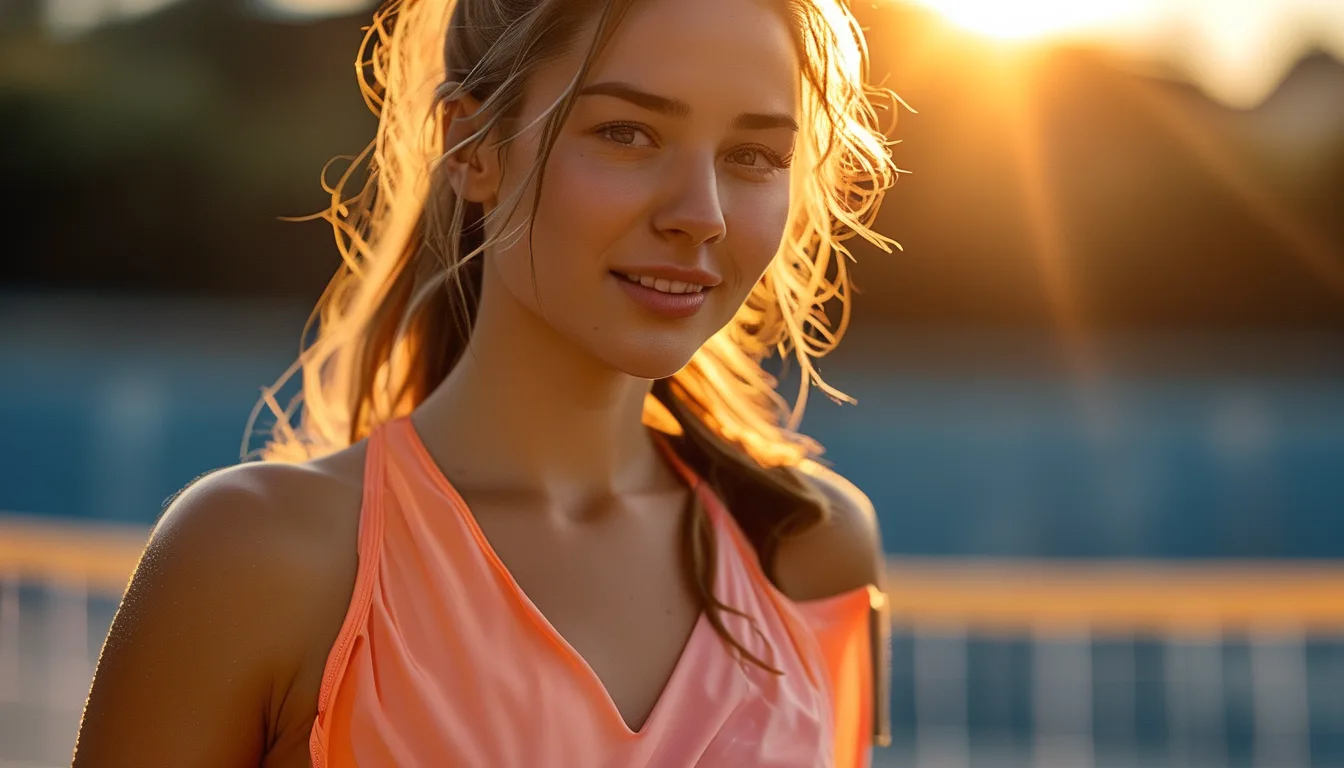
One Outfit for 90 Degree Noons and 60 Degree Nights
Quick Answer: Build the outfit from the base up, not from the jacket down. A 30 degree swing is survivable if your base layer is breathable enough for the hottest hour and your one added layer is warm enough for the coldest, with nothing in between. The mistake is a medium-weight everything, which is wrong at both ends of the day. Pick a lightweight moisture-managing base, full or near-full length legs, and a single packable layer that lives in your bag and weighs almost nothing.
You left at noon in 90F and you are standing outside at 9pm in 61F wondering what happened.
Late August does this in most of the US, and the answer is not more clothes. It is fewer, chosen more deliberately.
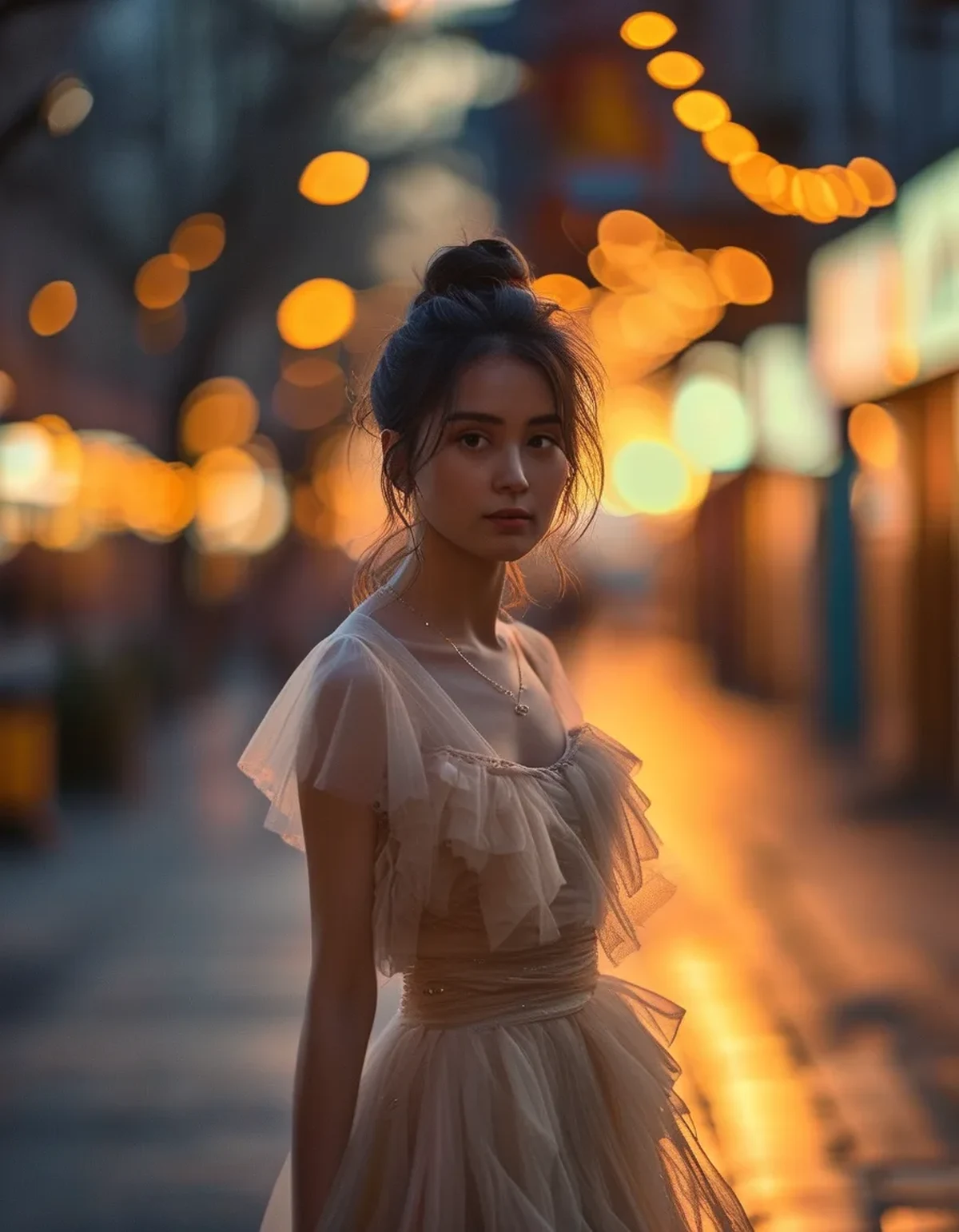
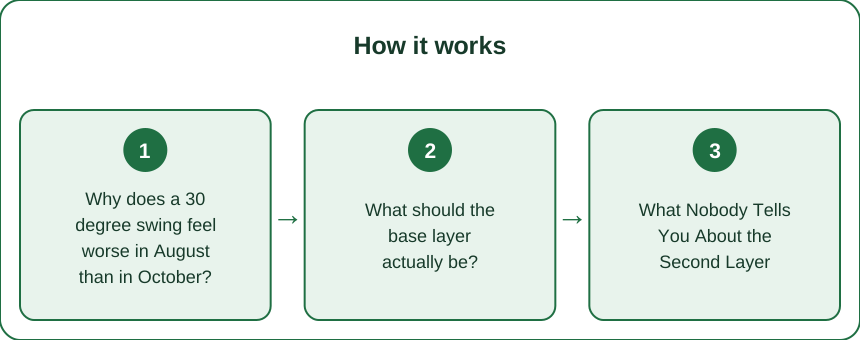
Why does a 30 degree swing feel worse in August than in October?
Because your body has spent three months acclimatised to heat.
Heat acclimatisation is real and it shifts your comfort range. After a summer of 85F days, your sweat response starts earlier, your plasma volume is up, and 61F genuinely feels colder to you than the same 61F will feel in November after a few cool weeks.
Add humidity. A humid 90F noon soaks whatever you are wearing, and that same damp fabric at 61F in the evening is actively removing heat from you through evaporation. A wet cotton tee is a cooling garment, which is wonderful at 2pm and miserable at 9pm.
So the swing is not just 30 degrees of air temperature. It is 30 degrees plus a wet base layer plus a body tuned for summer.
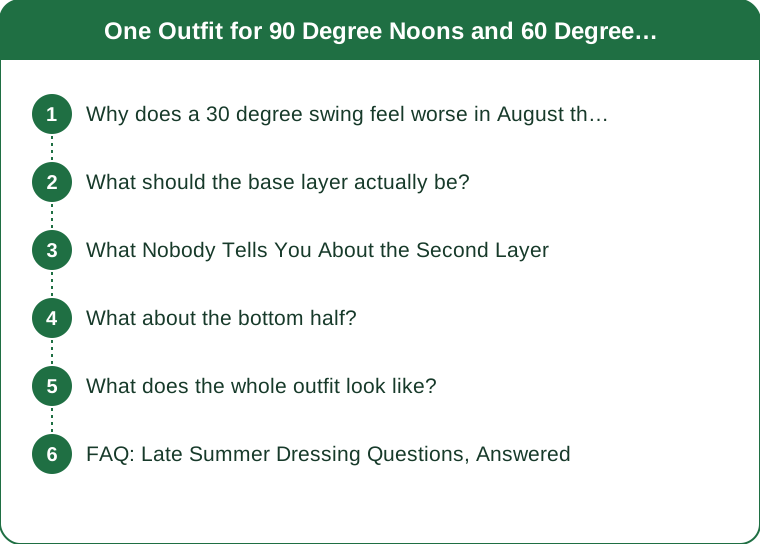
What should the base layer actually be?
This is the decision that carries the whole outfit.
Choose fast-drying over absorbent. A technical knit or a light synthetic blend moves moisture off the skin and dries in 20 to 30 minutes. Cotton holds several times its weight in water and dries in hours, which is exactly the wrong property for a day with a cold ending.
Fitted beats loose in humidity. Loose fabric that alternates between clinging and releasing feels worse than a light fitted layer that stays put and wicks steadily.
Sleeveless or short sleeve, not long. Your one added layer will handle the arms in the evening. A long-sleeve base leaves you nothing to add later.
Colour matters more than people think. A mid or light tone reflects more solar load at noon and shows sweat less than a saturated mid-tone. Black is comfortable in shade and punishing in direct August sun.
What Nobody Tells You About the Second Layer
Everyone says bring a layer. Nobody says which properties actually matter, and the wrong one is worse than none.
It has to pack to almost nothing. A layer you left at home because it was bulky is not a layer. If it does not compress into a tote or a small bag, you will stop carrying it by day three.
It has to be windproof-ish, not thick. At 61F, wind is doing most of the work of making you cold. A thin wind-resistant shell beats a thick soft knit at half the volume, because it stops convective heat loss rather than trying to out-insulate it.
It has to go on over a damp base without feeling awful. Anything that traps moisture against your skin will feel clammy. A layer with some breathability lets the base finish drying underneath it, which is the fastest way to get warm.
And the thing nobody mentions: put it on before you feel cold. Once you are cold and damp, a light layer cannot fix it, only slow it. At the first drop in light or wind, add it. That single habit is worth more than upgrading the garment.
What about the bottom half?
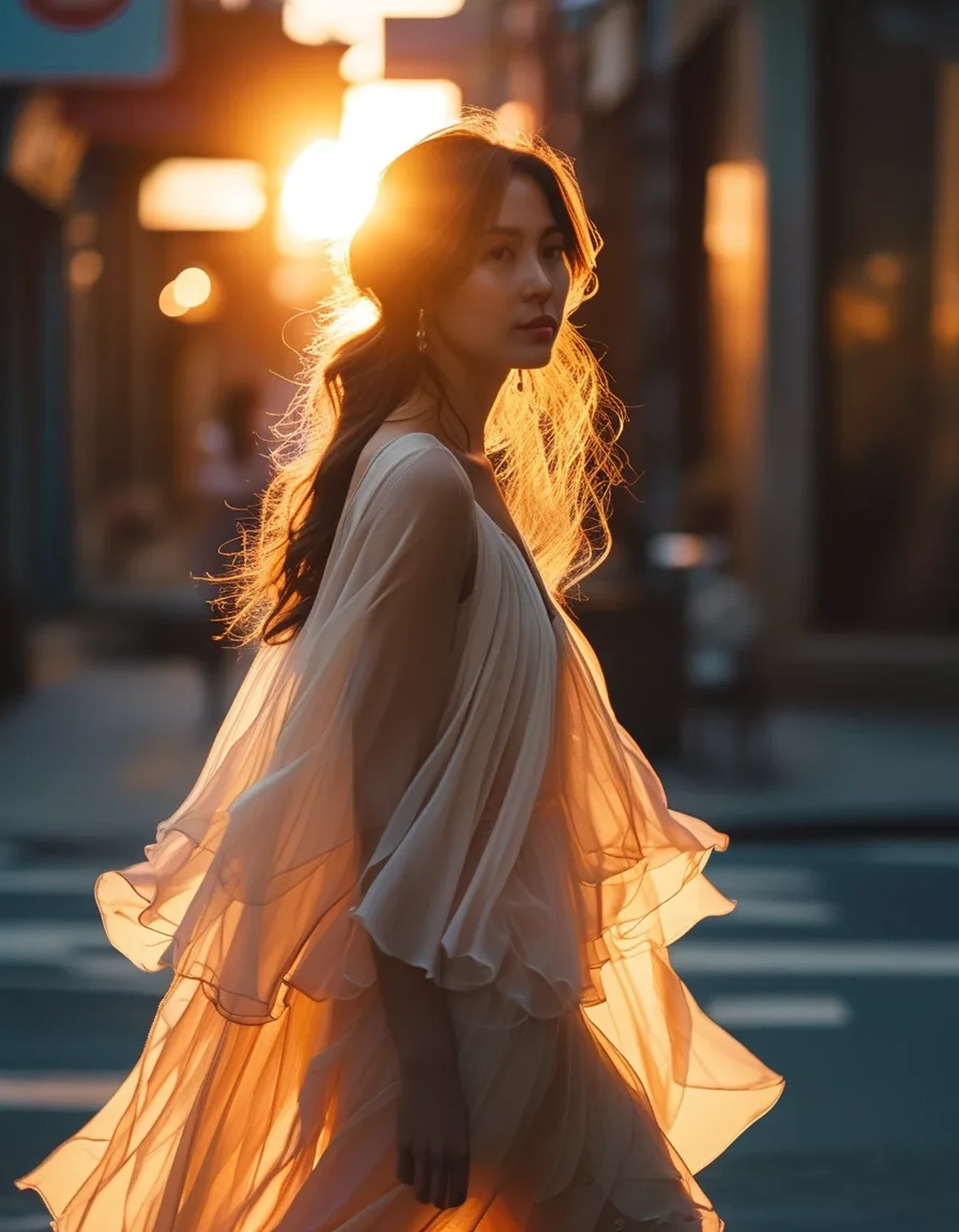
The legs are where most people get late August wrong, because they dress for noon and forget that evening air sits low.
Full length or near-full length wins on a swing day. Cropped is fine when the low is 70F. When it is 61F with a breeze, exposed ankles and shins are where you lose comfort first.
Lightweight and breathable, not thin and clingy. A dense but light knit breathes better than a very thin fabric that sticks.
Consider a wide or straight leg for airflow at noon if you are not training. A leg opening that moves air is meaningfully cooler than a closed one, and it still covers the skin in the evening.
Footwear counts. A breathable shoe with a light sock beats a sandal on a swing day, because bare feet at 61F undo a well-layered top half.
What does the whole outfit look like?
Assembled, it is unglamorously simple:
- Base: fitted, fast-drying, short sleeve or sleeveless, mid to light tone
- Bottom: full-length or ankle-length lightweight knit, breathable leg opening
- Layer: thin wind-resistant shell or a tightly woven light overshirt that packs to fist size
- Feet: closed breathable shoe, light sock
- In the bag: nothing else, because the point is that you actually carry it
What is deliberately missing: a mid-weight sweater, a denim jacket, a heavy hoodie. Each of those is too warm for noon and not warm enough for a windy 9pm, which is the definition of dead weight.
The test for whether you got it right: you should be comfortable at 2pm without rolling anything up, and comfortable at 9pm with exactly one thing added.
FAQ: Late Summer Dressing Questions, Answered
Is linen a good base for this?
Great at noon, poor at 9pm. Linen breathes beautifully but holds wrinkles of moisture and dries slower than technical knits. Good for a hot day with a warm evening, not for a big swing.
What if my evening involves sitting outside?
Add a scarf or a light wrap rather than a heavier jacket. Sitting still drops your heat production substantially, and neck coverage is disproportionately effective for the volume it takes up.
When should I actually switch to autumn fabrics?
When your evening low stays under about 60F for a full week, not when the stores tell you. In most of the US that is mid to late September, not late August.
Is one layer really enough for a 30 degree swing?
If the base dries fast and the layer blocks wind, yes. If the base is cotton, no amount of layering fixes the evening.
TL;DR:
- The problem is not just air temperature, it is a damp base layer plus a heat-acclimatised body.
- Fast-drying beats absorbent. Cotton is a cooling garment by 9pm.
- One packable wind-resistant layer beats a mid-weight sweater at both ends of the day.
- Full-length legs and closed shoes carry more of the evening than people expect.
Late August rewards deliberate minimalism. Two garments chosen for opposite ends of the day handle the swing better than four chosen for the middle of it, and you get to stop carrying a jacket you never wear.
Keep Reading
This article is for general informational and styling purposes only. Fit, sizing, and product availability may vary.