The One-Layer Rule That Fixes Late August Commutes
Quick Answer: Late August asks one outfit to handle a cool morning, a hot afternoon, and a cold indoor space. The rule that works is to dress fully for the hottest part of the day and carry exactly one layer that handles both the morning and the office. That layer needs to pack small, block air conditioning draught, and look intentional - which rules out most of what people actually grab.
You were cold at 7:30, uncomfortable at 2, and cold again at your desk by 3:30.
The mistake is trying to dress for the average of those three, which produces an outfit that is wrong for all of them.

Why does the average-temperature approach fail?
Because the day is not an average, it is three distinct conditions with a twenty-degree spread and completely different requirements.
Dressing for the middle leaves you wrong at both ends. A mid-weight top is too warm at 2pm and not warm enough at 7:30am, so you spend the whole day mildly uncomfortable rather than comfortable twice.
Indoor air conditioning is the condition people forget. Offices frequently run around 70F regardless of what is happening outside, and a still, cool, draughty environment feels colder than the same temperature outdoors.
The morning is short and the afternoon is long. Dressing for the coolest hour means overdressing for the majority of the day, which is why the base layer should belong to the afternoon.
That gives the rule its shape: dress fully for the hottest condition, then solve the other two with one carried item.
And it has to be one, because two layers means one gets left at the office or in a bag and the system stops working within a week.
What that one layer actually needs to do
Block draught rather than provide insulation. Office cold is mostly moving air, and a light windproof or tightly woven layer outperforms a thicker but more open knit at exactly this job.
Pack down to nothing. If it does not fit in your bag without thought, you will not carry it on a warm morning, and then it is not there at 3:30pm.
Work over the specific top you are wearing. A layer that only works over a t-shirt fails on the days you wear something fitted, and that is how people end up with three layers and no system.
Look deliberate rather than practical. A layer you are slightly embarrassed by is a layer you leave on the back of a chair, and the whole rule depends on it being with you.
Have sleeves that push up. The transition from cool to warm is gradual, and being able to run it at three-quarter length extends its useful window by about an hour on either side.
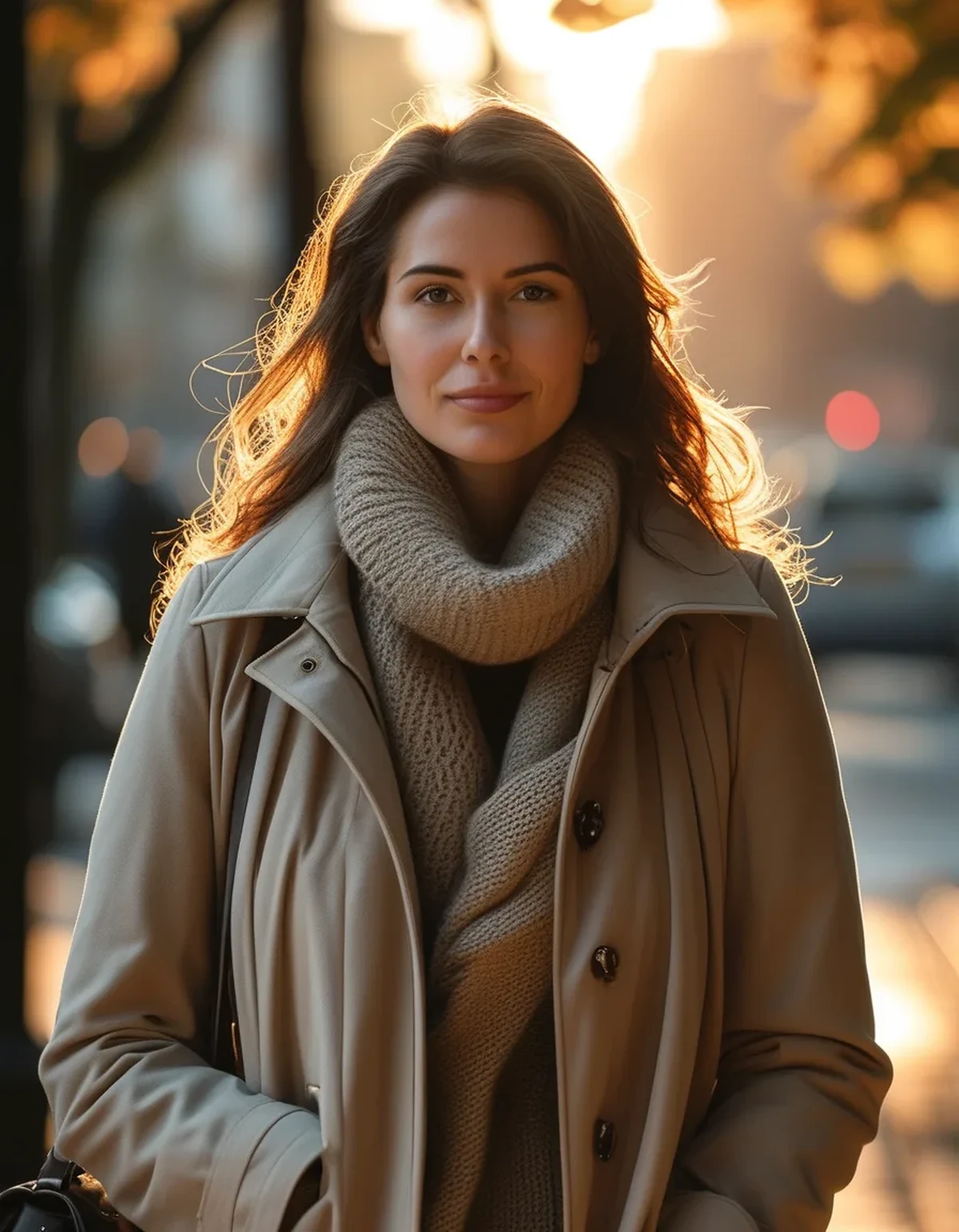
In practice that means a light knit, an unlined overshirt, or a thin technical shell - and generally not a hoodie, which is bulky, not draught-proof, and rarely reads as intentional at a desk.
What to wear underneath it
Choose the base for 2pm, not for 7:30am. Breathable, light-coloured, and comfortable at the hottest point of the day, because that is where you will spend the most hours.
Natural or technical fibres over heavy cotton. Cotton holds moisture at exactly the moment the air conditioning hits, which is the specific mechanism behind that sudden chilled feeling at a desk after a warm walk.
Full-length over cropped for the bottom half, since ankles and lower legs are where office draught is felt first and nothing can be added there later.
One clear structural piece keeps it from reading as too casual - a defined waist, a structured trouser, or a tailored short - which matters because the base layer is what people see for most of the day.
Closed shoes rather than sandals, for the same draught reason. Feet are the other place office air conditioning finds first, and socks are easier to add than to invent.
And keep the palette to two or three colours, so the carried layer works with everything you own rather than being tied to one outfit.
FAQ: Late August Commute Layering, Answered
Should I dress for the morning or the afternoon?
The afternoon. It is the longer condition by several hours, and the morning is easily solved by one carried layer whereas overheating at 2pm is not.
What layer works best for office air conditioning?
Something that blocks moving air rather than something thick. A tightly woven or light technical layer beats a chunky open knit at the same weight, because office cold is mostly draught.
Why do I feel colder indoors at 70F than outdoors at 65F?
Still, moving, conditioned air plus any moisture in your clothing from the walk. Cotton in particular holds that moisture and releases the chill exactly when you sit down.
Is a hoodie a reasonable option?
Rarely. It is bulky to carry, not especially draught-proof, and usually reads as too casual at a desk - which means it gets left behind and the system fails.
Should I keep a spare layer at the office?
It helps as a backup, but the rule works better with one layer you always carry. Two layers means one gets stranded and you stop thinking about the system.
What about the lower half?
Full length rather than cropped, and closed shoes. Ankles and feet are where office draught lands first and neither can be fixed later in the day.
How long does this approach stay useful?
Through the whole transition, roughly until the morning stops warming into a hot afternoon. At that point the carried layer becomes a worn layer and the rule retires itself.
TL;DR:
- Late August is three conditions in one day, and dressing for the average leaves you wrong at both ends.
- Dress fully for the hottest part of the day, then solve the morning and the office with exactly one carried layer.
- That layer should block draught rather than insulate, pack down small, and look deliberate enough that you keep it with you.
- Avoid heavy cotton underneath - it holds moisture from the walk and releases the chill the moment you sit down.
- Full-length bottoms and closed shoes, because ankles and feet are where office air conditioning lands first.
One layer, not two. The second one always gets stranded, and then the system stops working.
Keep Reading
This article is for general informational and styling purposes only. Fit, sizing, and product availability may vary.