What to Wear When Mornings Turn Cool but Afternoons Do Not
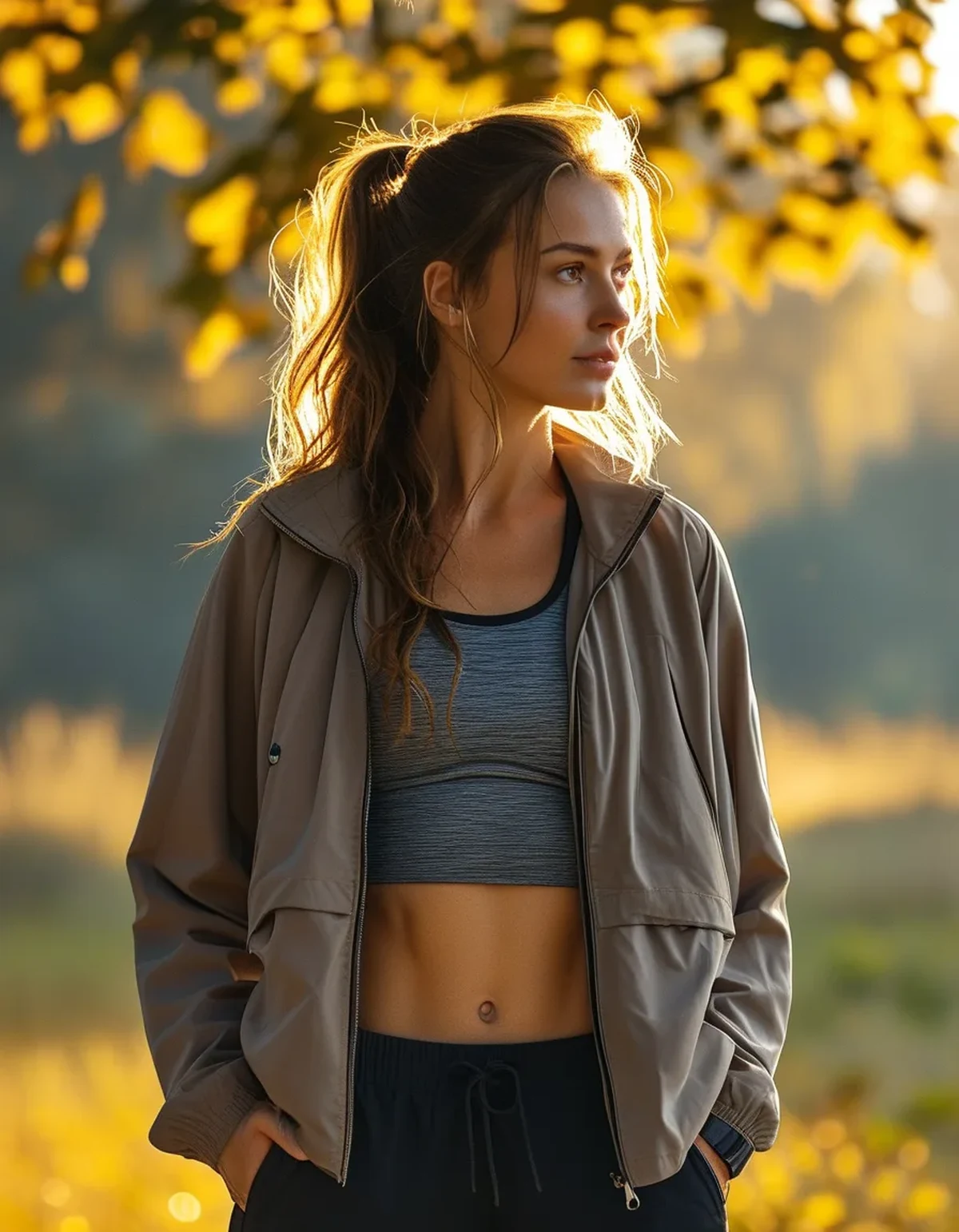
Quick Answer: Dress for the afternoon and add one removable morning layer you can carry without looking like you are carrying it. The failure mode of late-summer dressing is committing to fall — heavier fabrics, closed shoes, long sleeves — before the afternoons have caught up. Base layer for 84 degrees, one packable layer for 58.
There is a specific two-week stretch every year where getting dressed becomes genuinely hard.
You walk out at 7am and it is unmistakably cool. You put on the jacket, the long sleeves, maybe the boots. By 1pm you are carrying half your outfit and regretting the other half.
This is not a wardrobe gap. It is a strategy problem, and it has a clean answer.
Should you dress for the morning or the afternoon?
The afternoon, always. Here is the logic: you spend 20 to 40 minutes cold in the morning, and six hours uncomfortable in the afternoon if you get it backwards.
Cold is also easier to solve than hot. A layer fixes cold in ten seconds. Nothing fixes being overheated in a wool-blend sweater at 2pm except leaving.
So the structure is:
- Base: built for the day’s high. Short sleeves or a light long sleeve in a breathable fabric
- One layer: something genuinely packable — it has to fit in a tote or tie at the waist without bulk
- Shoes for the high, not the low. This is the one people get wrong most; boots at 7am are a commitment to boots at 3pm
The whole outfit should pass this test: could you remove exactly one item and be comfortable in a 25-degree warmer environment?
What fabrics actually work in a 25-degree swing?
Fabrics that breathe when warm and still block a bit of wind when cool. That narrows it considerably.
Works well:
- Lightweight merino — genuinely comfortable across a wide range, and it does not hold odor on a long day
- Cotton-modal jersey — soft, breathable, drapes better than pure cotton
- Technical knits with mechanical stretch and open structure
- A thin nylon shell for the packable layer; it takes up nothing and handles a breezy morning
Struggles:
- Heavy French terry and fleece — lovely at 58, unbearable at 84
- Thick denim jackets — the classic transitional piece that is actually only good for a five-degree window
- Anything with a bonded or lined construction, which traps heat with no adjustment
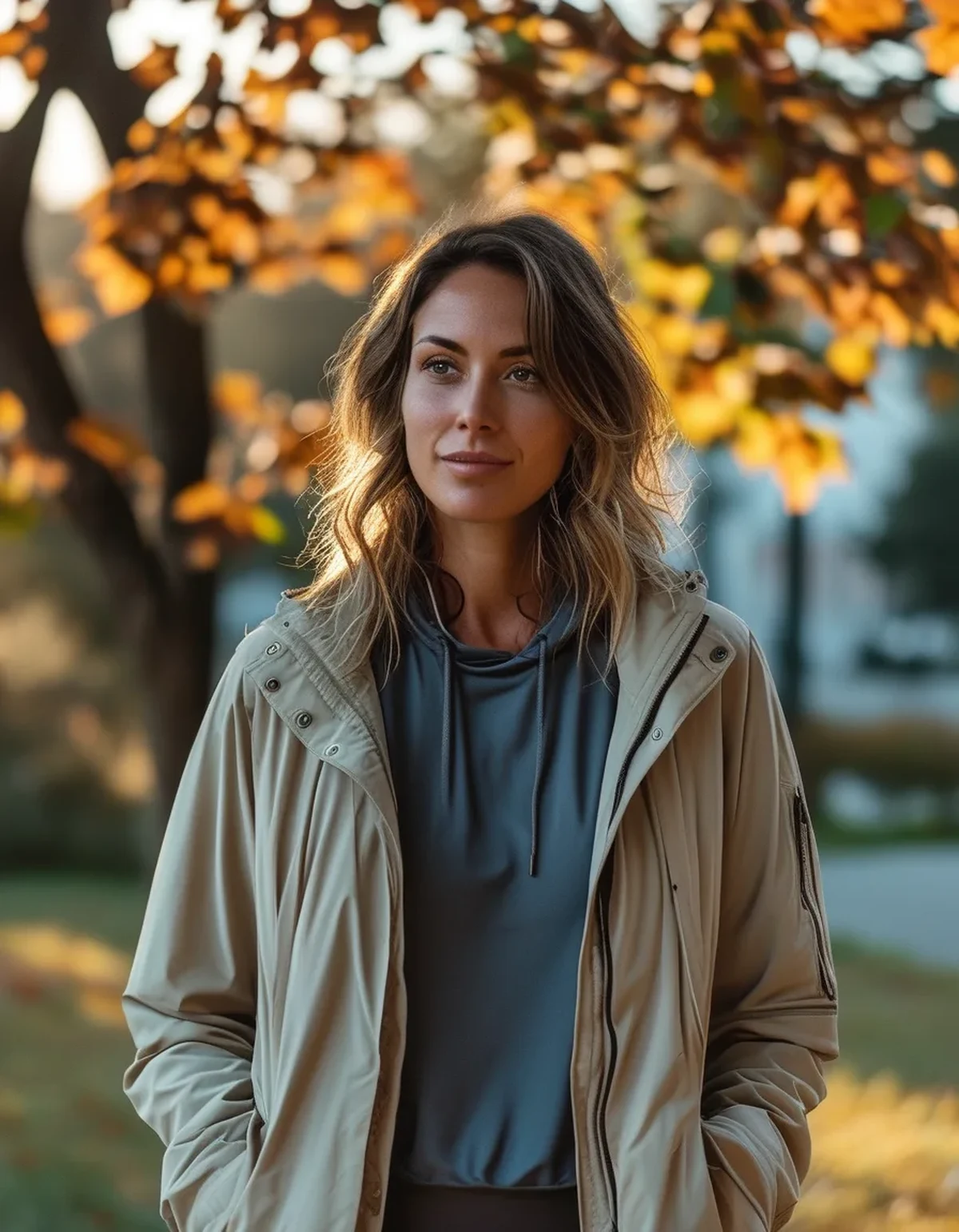
For the morning layer specifically, the priority is packability over warmth. A thin layer you actually carry beats a warm one you leave at home because it is bulky.
5 Mistakes That Ruin Transitional Outfits
- Switching to fall colors and fall fabrics at the same time. Colors can go early; fabrics cannot. Rust and olive in a summer-weight knit reads seasonal without cooking you.
- Wearing the layer you cannot carry. If removing it means holding it in your hand for four hours, you will keep it on and be miserable. Test: can it tie at your waist or fold into your bag?
- Closed, unlined shoes with no socks. Fine at 58, damp and unpleasant at 84. Either wear no-show socks or accept an open shoe for another two weeks.
- Full-length leggings in a heavy compression fabric. The single most common late-summer overshoot. A lighter-weight full length or a 7/8 in a breathable knit handles both ends of the day.
- Layering two mid-weights instead of one light plus one shell. Two mediums give you one temperature. Light plus shell gives you three.
Number two is the one that quietly ruins the most days.
How do you build three outfits that cover the whole window?
Three combinations that handle almost every day of the transition:
The errand day. 7/8 leggings in a breathable knit, a fitted short-sleeve top, an oversized shirt worn open as the removable layer, and sneakers. The shirt ties at the waist when it warms up and reads intentional rather than improvised.
The out-and-about day. A midi skirt or wide-leg pant in a summer-weight fabric, a fitted tank, and a thin cardigan or shell. Adds polish without adding warmth, and the tank is the actual afternoon outfit.
The move-around day. Bike shorts or a short legging with a longline top and a lightweight quarter-zip. The quarter-zip is underrated here — it gives you a partial adjustment rather than the all-or-nothing of a jacket.
Across all three: keep the base honest to the afternoon high, and let the layer do the temperature work. The most stylish transitional outfits are almost always a summer outfit with one good layer over it, not a fall outfit with the sleeves pushed up.
FAQ: Late-Summer Dressing Questions, Answered
When is it actually time to switch to fall clothes?
When the afternoon high stops reaching the mid-70s consistently for about a week. Chasing the first cool morning is what starts the whole problem.
What is the best single piece to buy for this window?
A thin, packable overshirt or shell in a neutral. It works over almost everything and stores in a bag, which is the entire requirement.
How do I handle sweating through a morning layer?
Choose a base you would be happy in alone, and treat the layer as truly external — never as something with to be worn under something else. If your base gets damp, the layering plan was already wrong.
TL;DR:
- Dress for the afternoon high, add exactly one removable morning layer
- Prioritize packability over warmth in that layer — a bulky one gets left at home
- Shoes should match the high, not the low
- Fall colors can arrive early; fall fabrics cannot
Check tomorrow’s high before you get dressed, not the current temperature. That single habit fixes most of this window.
See It in Motion
Seen here: High Waist Embossed Yoga Leggings with Side Pockets — shop it on bubblelime.com
Keep Reading
This article is for general informational and styling purposes only. Fit, sizing, and product availability may vary.