August Sun Is Still Strong — What UPF Actually Means in Activewear
Quick Answer: UPF measures how much UV a fabric blocks: UPF 50 blocks about 98 percent, UPF 30 blocks about 96.7 percent, and anything under 15 is not rated as sun-protective. The rating comes from knit density, fiber type, and color, not from a chemical coating in most cases — which means a dense dark polyester top you already own may effectively perform at UPF 30 or higher. What genuinely changes protection: wet fabric loses UPF, stretched fabric loses UPF, and worn-thin fabric loses UPF.

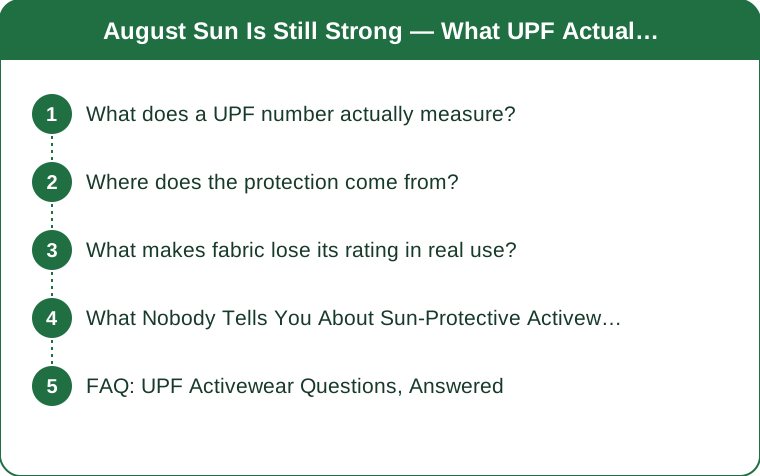
What does a UPF number actually measure?
Ultraviolet Protection Factor is the ratio of UV that reaches skin without the fabric versus with it. UPF 50 means roughly 1/50th of UV gets through — about 98 percent blocked.
The scale is deliberately non-linear in usefulness. Going from unprotected to UPF 15 is a huge jump. Going from UPF 30 to UPF 50 moves you from about 96.7 percent to about 98 percent, which is real but far smaller than the numbers suggest.
UPF covers both UVA and UVB, which distinguishes it from the SPF rating on sunscreen, which primarily reflects UVB. That is a genuine advantage of clothing as a sun strategy.
Ratings are assigned under standardized testing on new, dry, unstretched fabric. Every one of those three conditions matters, and none of them describe a garment in the middle of a workout.
The practical takeaway: UPF 30 to 50 is the useful band, and chasing higher numbers buys very little. What actually determines your exposure is coverage area and whether the fabric is in its tested condition.
Where does the protection come from?
Knit density, first. UV passes through the gaps between yarns. A tighter knit has smaller gaps. This is why a thin, open mesh top offers little protection even in a technical fabric, and a dense jersey offers a lot.
The home test: hold the fabric up to a light source. If you can see the light clearly through it, UV is getting through too. It is a crude test but directionally accurate.
Fiber type. Polyester is naturally UV-absorbing and performs well. Nylon is decent. Cotton is poor — an untreated white cotton tee is often around UPF 5 to 7, which surprises people who wear one specifically to cover up.
Color. Darker and more saturated colors absorb more UV. A black or navy top outperforms the same fabric in white by a meaningful margin. This runs directly against the instinct to wear light colors in heat, and it is a real tradeoff.
Treatment. Some garments add UV-absorbing agents. These work, but they wash out over roughly 20 to 40 cycles, whereas density-and-fiber protection is permanent for the life of the garment.
So the durable protection is structural. Buy density and dark polyester and it stays; buy a coating and it fades.
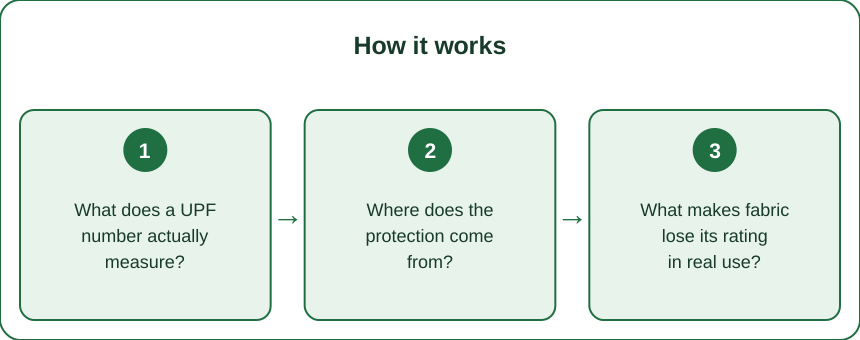
What makes fabric lose its rating in real use?
Wetness. Wet fabric can lose a large share of its UPF, because water fills the gaps between yarns and changes how light refracts through them. A sweat-soaked or swim-wet top protects considerably less than the tag says. Fabrics rated for wet performance exist and will state it.
Stretch. Pulling fabric taut opens the gaps. A top stretched over the shoulders during movement, or a legging stretched across the thigh, is measurably less protective in exactly those spots.
Wear. Thinned fabric at high-friction points protects less. That is not a reason to worry about a new garment, but it is a reason not to rely on a five-year-old favorite.
Coverage gaps. The most common real-world failure is not fabric performance at all — it is the back of the neck, the tops of the ears, the hands, and the part in your hair. A UPF 50 top does nothing for any of them.
And the timing point specific to August: UV index is still routinely high in early afternoon even as temperatures ease and daylight shortens. The sun feels less intense because the heat has dropped, which reliably leads people to under-protect in late summer more than in July.
What Nobody Tells You About Sun-Protective Activewear
Long sleeves can be cooler than short. A light, loose UPF sleeve shades skin and lets sweat evaporate off the fabric surface. In dry heat this beats bare skin. In high humidity, the effect largely disappears.
Loose beats tight for both cooling and protection. Loose fabric is unstretched, which preserves the rating, and it moves air.
Shade is not full protection. Reflected UV from pavement, sand, and water reaches skin under an umbrella or tree canopy. Fabric coverage works everywhere; shade only blocks the direct path.
Sunscreen and clothing are complements, not alternatives. Clothing covers what it covers, completely and consistently. Sunscreen handles the rest, and is the only option for face and hands.
White with a lining is a workaround if dark colors are unbearable in heat — two light layers together often outperform one dark layer, at the cost of some breathability.
UPF does not degrade from sun exposure itself in density-based fabrics, only from wear and washing. A structural rating is durable in a way a coating is not.
FAQ: UPF Activewear Questions, Answered
Is a regular black gym top enough?
A dense black polyester top often performs in the UPF 30 to 50 range untested. It is a reasonable everyday choice. For long, deliberate sun exposure, a rated garment removes the guesswork.
Does UPF wash out?
Structural protection from knit density and fiber does not. Chemical treatments do, over roughly 20 to 40 washes. Check whether the garment claims a treatment or a construction.
Is late-summer sun really still a concern?
Yes. UV index in early afternoon stays high well into September in most of the US, and it drops later than the temperature does — which is exactly why people misjudge it.
Should I worry about UV through leggings?
Rarely. Most leggings are dense enough to be highly protective. The exceptions are very thin, light-colored pairs, and any pair stretched taut over the thigh. Sun exposure through fabric is not a substitute for medical advice about skin concerns — see a dermatologist for anything on your skin that is changing.
TL;DR:
- UPF 30 to 50 is the useful band; above 50 adds almost nothing.
- Protection comes mostly from knit density, polyester content, and dark saturated color — not from a coating.
- Hold fabric to a light: if light passes easily, so does UV.
- Wet, stretched, and worn fabric all lose protection relative to the tested rating.
- The real gaps are neck, ears, hands, and scalp — clothing does not cover them.
Late summer is when protection slips, because the heat drops before the UV does. The dense dark top you already own is probably doing more than you think.
See It in Motion
Seen here: High Waist 8” Yoga Shorts — shop similar styles on bubblelime.com
Keep Reading
This article is for general informational and styling purposes only. Fit, sizing, and product availability may vary.