What to Wear When It Is 88 Degrees and Raining
Quick Answer: In warm rain, waterproofing works against you, because a shell that keeps rain out also keeps sweat in and you end up wet either way. Choose fabrics that handle being wet instead: synthetic knits that stay light and dry fast, a water-resistant rather than fully waterproof layer, and dark or patterned pieces that do not turn transparent. Skip cotton entirely, skip the rain jacket unless it is genuinely ventilated, and plan the shoes and the bag more carefully than the clothes.
October rain has an obvious answer. You put on a shell, you stay dry, you are pleased with yourself.
August rain at 88 degrees and 80 percent humidity does not have that answer. A shell turns into a sauna in about six minutes, and you arrive as wet as you would have been without it, just warmer and less comfortable about it.

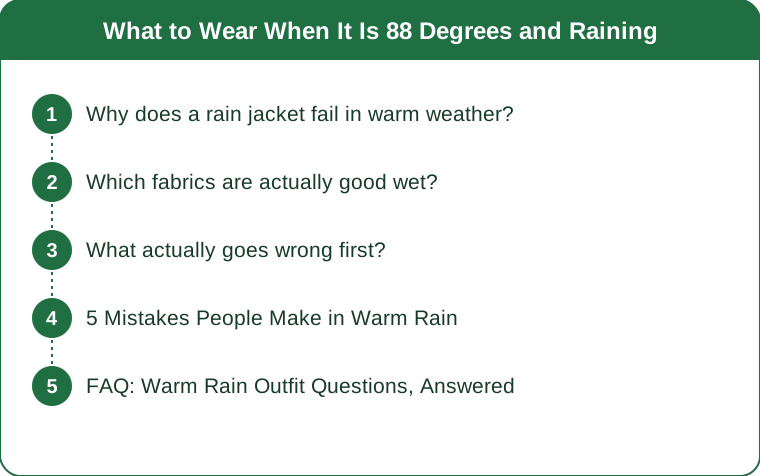
Why does a rain jacket fail in warm weather?
Because waterproof-breathable fabrics rely on a moisture gradient that mostly disappears in humid heat.
The way these fabrics move sweat outward depends on the air outside being drier than the air inside. In 80 percent humidity, there is not much of a gradient, so vapor transfer slows dramatically.
At the same time, you are producing far more sweat than you would at 55 degrees. More moisture in, less moisture out.
The result: the jacket keeps rain off and traps your own sweat, so you end up damp from the inside. This is a fabric physics limit, not a cheap-jacket problem, and the expensive shell fails the same way.
What actually works instead: accept being wet and choose fabrics that are pleasant when wet. This is a genuine mental shift and it is the whole solution.
The exception worth knowing: a jacket with real ventilation, meaning pit zips, a mesh back panel, or a vented cape construction, can work because it gives moisture a mechanical escape route rather than relying on the fabric. If you want one warm-rain layer, that is the specification to look for.
Which fabrics are actually good wet?
The question is not what repels water, but what behaves well while soaked.
Work well:
- Polyester and nylon knits. Absorb very little, stay light, dry fast, and do not sag.
- Nylon-elastane blends, common in activewear. Keep their shape wet, which matters more than people expect.
- Merino, in lighter weights. Heavier when wet than synthetics and it stays warm and does not develop odor, which is worth something on a humid day.
Cause problems:
- Cotton, in every form. Absorbs many times its weight, gets heavy, stays wet for hours, chafes, and sags out of shape. A wet cotton t-shirt on a humid day is the single worst choice available.
- Linen. Beautiful dry, translucent and shapeless wet.
- Anything with a heavy nap or thick fleece lining, which holds water indefinitely.
- Light neutrals in thin knits. They turn transparent. This is worth checking in the mirror rather than discovering it on the street.
Two practical fabric checks before you leave: hold the fabric up to a light to judge how thin it is, and, if you are unsure, wet a small patch under a tap and see what happens to the opacity and the shape.
On seams and edges: wet fabric plus repeated motion means chafing. Flatlock seams and bonded hems matter considerably more in the rain than in the dry, particularly on shorts inseams and under arms.

What actually goes wrong first?
Not the clothes. The shoes, the bag, and the waistband.
Shoes are the real failure point. Wet shoes stay wet all day, cause blisters within a couple of miles, and are the most common reason a rainy workout turns miserable. Mesh running shoes drain and dry, and are the better choice than anything water-resistant, which holds water in once it gets over the top.
Carry dry socks. This is the highest-value item in your bag and it costs nothing.
Bags soak through from the bottom. A backpack sitting against a wet back gets damp on the inside face regardless of the outer fabric. Put your phone and anything electronic in a sealed plastic bag inside the pack, not in an outer pocket.
Waistbands are the third problem. Wet elastic loses grip, and wide waistbands hold water against your skin. A drawcord you can retighten wet is worth more than a wide compressive band on a rainy day.
And a specific to add: anything light-coloured and thin becomes see-through when wet, and a wet band or waistband edge shows through outer layers. Mid to dark tones, or a print, avoid the entire problem.
Late-summer detail worth planning around: the rain is warm but air conditioning is not. Arriving damp at an aggressively cooled office or gym is genuinely cold, and this is the most common way people end up uncomfortable on a hot rainy day. Pack one dry layer for indoors, even though it feels absurd carrying a top on an 88-degree morning.
5 Mistakes People Make in Warm Rain
1. Wearing the October shell. Covered above. In humid heat it traps more sweat than it blocks rain, and you arrive wet either way. Save it for when the temperature drops.
2. Choosing a cotton t-shirt because it is hot. Cotton feels cooler in dry heat and is the worst possible fabric in wet heat. It holds water, gets heavy, and chafes. Synthetic knits win decisively here.
3. Layering to stay dry. Extra layers in warm rain just give the water more to soak into and slow drying. One good layer beats two mediocre ones.
4. Ignoring the shoes and socks. The clothes recover in twenty minutes. Wet shoes stay wet for a day, and blisters last a week. Mesh shoes that drain plus a spare pair of socks solves most of it.
5. Not planning for the air conditioning. The rain is 88 degrees and the building is 68. Damp plus air conditioning is where people actually get uncomfortable, and one dry packed layer fixes it.
The thing nobody mentions: warm rain is a genuinely good time to train outdoors. Fewer people out, cooler than the same day without rain, and the humidity that makes a dry 88 degrees oppressive is at least accompanied by evaporative relief. Dressed right, it is often the most pleasant run of the week.
Where we are in the season: this is the last stretch of warm rain for the year in most of the US. Within a few weeks the same rain arrives at 65 degrees and the whole calculation inverts, at which point the shell becomes correct again and cotton becomes a genuine cold risk rather than just an annoyance. Worth noticing the day the switch happens rather than dressing on autopilot into October.
FAQ: Warm Rain Outfit Questions, Answered
Should I wear a rain jacket in hot humid weather?
Usually not, unless it has real ventilation like pit zips or a mesh back. In high humidity the fabric cannot move sweat out fast enough, so you end up damp from the inside anyway.
What is the worst fabric to wear in warm rain?
Cotton. It absorbs many times its weight, stays wet for hours, gets heavy, sags, and chafes. Polyester and nylon knits stay light and dry quickly.
How do I keep my feet from getting wrecked in the rain?
Mesh shoes that drain and dry, rather than water-resistant shoes that hold water in once it gets over the top, plus a spare pair of dry socks in your bag.
TL;DR:
- Waterproof fails in humid heat because there is no moisture gradient to move sweat out. You get wet either way, just warmer.
- Pick fabrics that behave well wet: polyester and nylon knits, nylon-elastane blends, light merino. Cotton and linen are the worst options.
- Shoes, socks, and bag contents fail before the clothes do. Mesh shoes that drain, plus spare socks, plus a sealed bag for your phone.
- Pack one dry layer for the air conditioning. Damp plus 68 degrees indoors is where the discomfort actually happens.
Stop trying to stay dry in August rain. Dress to be comfortable wet, and the whole problem gets easier.
Keep Reading
This article is for general informational and styling purposes only. Fit, sizing, and product availability may vary.